Granite Edge Profiles Compared for Austin Kitchens
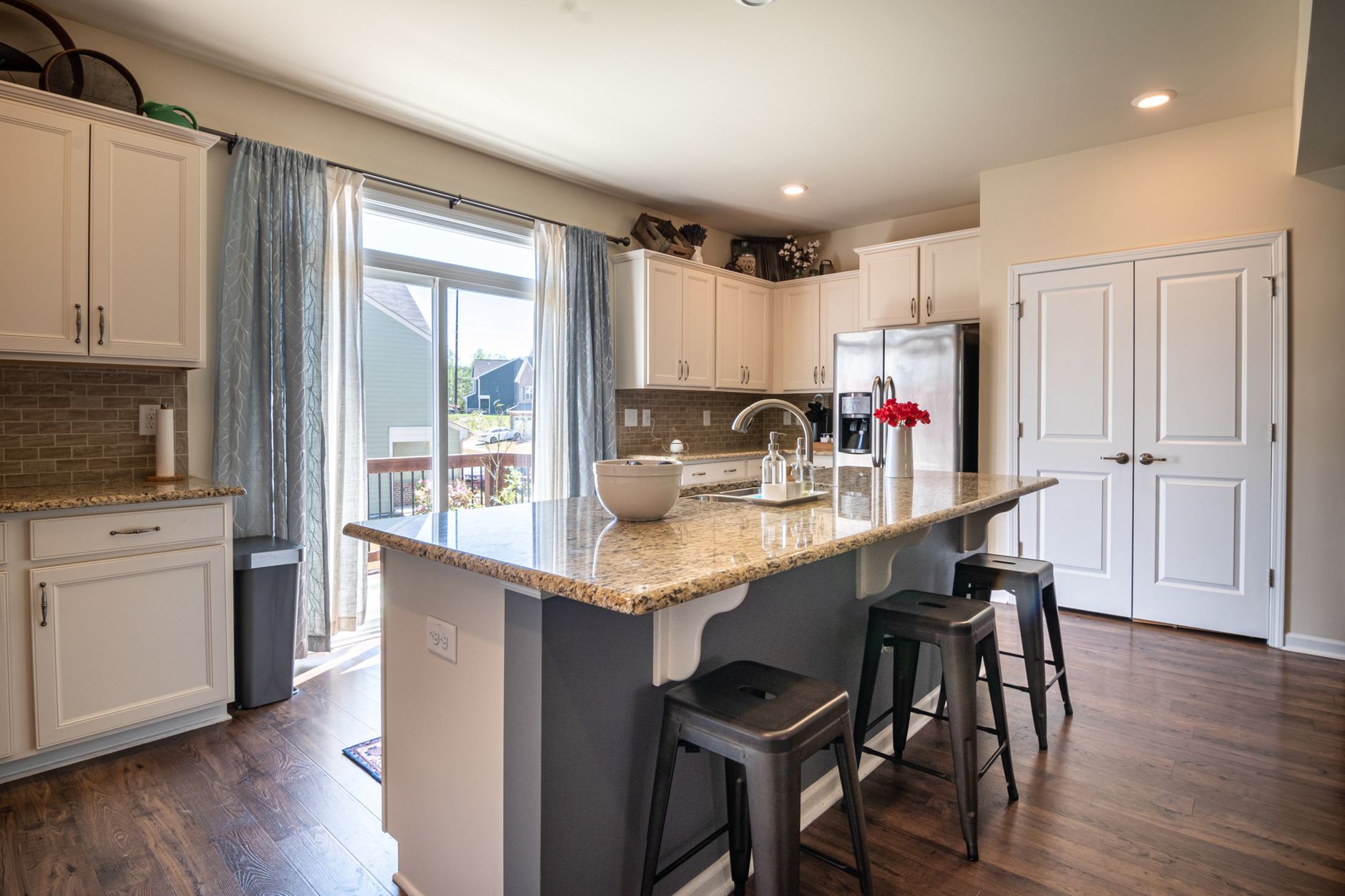
The edge is the part of a granite top that people touch, bump and lean on every day, and it is also the part that is cut last and talked about least. In Austin kitchens the choice usually gets made at the end of a long afternoon, with a catalog page and a deadline. This is a closer look at what each common profile does once the stone is on the cabinets, and how the finish, the sink and the house itself change the answer.
What is an edge profile, and why does it matter?
An edge profile is the shape ground into the front and sides of the slab. The stone is cut square at the saw, and a machine, then hand tools, shape the edge and polish it to match the face. The shape decides three practical things: how easily a corner chips, how the edge catches light, and how comfortable it is against a forearm or a hip at the sink. A profile with a sharp corner looks crisp and is more likely to be knocked. A rounded one looks softer and takes a hit better.
How do the common profiles compare?
| Profile | Shape | Where it works | Watch for |
|---|---|---|---|
| Eased | Square edge with the sharp corner lightly rounded | Modern and plain kitchens, busy family counters | Reads thin and plain; a corner can still chip if hit hard |
| Bullnose | Fully rounded, half-circle edge | Islands and peninsulas where people lean, homes with children | Rounded edge hides the thickness of the slab |
| Half bullnose | Flat face with a rounded top and a straight lower half | Traditional kitchens, older bungalows | The lower corner is square and can collect dust |
| Beveled | Flat angled cut along the top corner | Contemporary kitchens with straight lines | The bevel edge is a hard line that shows chips |
| Ogee | S-shaped curve with a step | Formal or classic kitchens with large islands | Grooves hold crumbs and dust; harder to clean |
| Waterfall | Slab turns down the side of the cabinet to the floor | Island ends, modern open plans | Needs matched pattern and a precise mitered corner |
None of these is the right answer by itself. The profile has to suit the cabinet door style, the thickness of the slab and how the room is used.
Which profile suits a busy family kitchen?
A kitchen where children do homework at the island, someone leans on the corner while talking, and pots get carried past the same spot a dozen times a day needs a forgiving edge. The bullnose and the eased edge both do that job. A bullnose spreads a bump over a rounded surface so the stone does not take a point load. An eased edge is plainer and gives a cleaner line, and a slightly larger radius on the corner makes it kinder to a forearm. Beveled and ogee edges look sharper and ask more of the people using them.
How does the finish change how an edge looks?
A polished finish picks up a thin line of reflected light along every curve. On a bullnose it shows as a soft stripe, and on a beveled edge it shows as a bright flat band. A honed finish scatters the light, so the same shapes read as a gentle shadow and the detail is quieter. Bright kitchens with strong Texas sun through the window over the sink will show these highlights more than a dim room does. A dark granite shows the edge line more strongly than a light one, since the contrast between the polished edge and the stone face is greater.
What does the sink do to the edge decision?
An undermount sink sits below the stone, so the cutout edge is a profile of its own, and it needs thought. A square, polished cutout edge is common, and so is a slight bevel or an eased edge. The cutout edge is where water sits and where a sponge scrubs, so a crisp corner there can chip. The strip of stone between the bowl and the front edge also carries the weight of the top, so a big decorative profile on the front edge can make it narrower. A plain edge in front of an undermount sink leaves more stone where it counts.
Does the thickness of the slab matter?
A thicker slab, or a top built up with a second strip glued under the front edge, gives a deeper, heavier look and allows more complex profiles like an ogee. A thinner slab suits an eased or beveled edge and looks light. Mitered edges, where two pieces are cut at an angle and joined to form a thick, square-looking edge, take the most skill and make seams that have to be matched to the pattern. When a mitered edge is done well, the vein appears to wrap around the corner as if the stone had been bent.
How does the age of the house affect the choice?
A bungalow in Hyde Park or Travis Heights, with painted inset cabinets and a window over the sink, often looks right with a half bullnose or a simple eased edge. A newer home in Mueller with flat-front cabinets and a big island leans toward an eased edge, a thin mitered edge or a waterfall end. Matching the age of the kitchen keeps the edge from looking like a separate decision. The house that is out of square, which many older ones are, is also easier on a rounded edge, since a gap along a wall hides better behind a soft profile than behind a hard line.
Is a waterfall edge worth it?
A waterfall edge carries the slab down the side of the island to the floor, and it is a striking detail. It is also the most demanding. The corner is a miter, two pieces cut at forty-five degrees and joined, and the pattern has to run continuously across it. That calls for slabs from the same block, laid out so the veins meet. The extra weight at the end of the island has to be supported by the cabinet and the floor. People who like the look should plan for it at the slab yard, when the layout is drawn on the actual stone, since it cannot be added after the top is cut.
What about cleaning and care?
Simple profiles clean faster. A bullnose and an eased edge wipe in one pass, while an ogee holds crumbs in its curves and needs a soft brush. Hard water spots collect on the polished edge as they do on the face, and a dry cloth after the sink is used keeps them away. The sealer should reach the edge, since it is the most handled part of the stone. When resealing, run the cloth along the edge and the cutout, not only across the flat surface.
Which profile should be chosen?
Choose the edge that matches the cabinets, the way the room is used and how much stone the sink leaves at the front. Ask to see a full-size sample of the profile on the same stone, polished the way it will be finished.