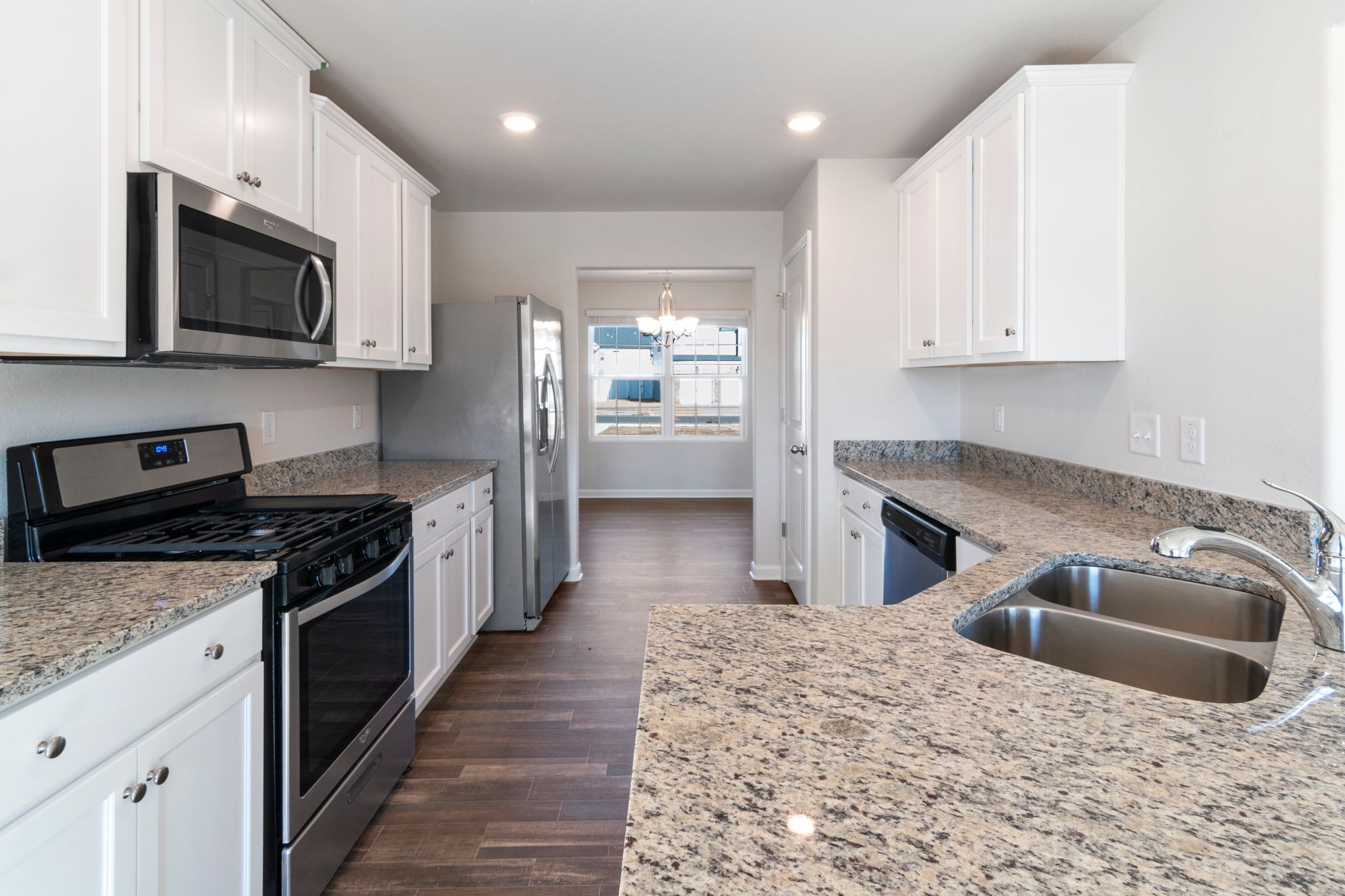
Granite Countertops in Austin, TX
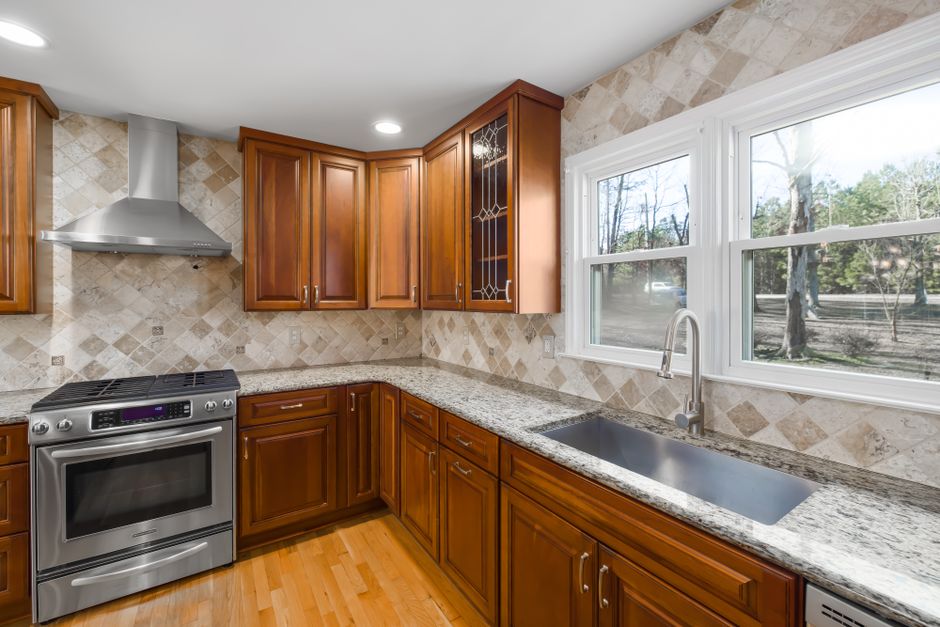
Notes on choosing, sealing and caring for granite countertops in Austin, TX, from reading a slab at the yard to cleaning it in hard local water.
What We Cover
- Cleaning Granite in Hard Austin Water How the mineral-heavy water drawn from the Colorado River leaves spots on granite, and how to clean and reseal it correctly.
- Honed or Polished Granite in Bright Austin Kitchens How a honed finish and a polished finish catch light, show fingerprints and water spots, and wear over years in a sunny kitchen.
- Pitting and Fissures in Granite and What Is Normal How to tell a natural fissure or tiny pit from a real crack, and which marks are part of the stone and which are damage.
- Reading the Movement and Veining in a Granite Slab What veining, banding and clusters mean in a granite slab and how to judge where each part of it will land on your cabinets.
- Where Granite Seams Fall in an Austin Kitchen Why a long run of granite needs a seam, how installers choose where it goes, and how the joint is filled and matched.
- Why No Two Granite Slabs Match How granite forms underground, why every slab carries its own crystals and color, and what that means when choosing stone for one kitchen.
Granite Countertops in Austin, TX
Granite has been the working counter in Austin kitchens for a long time, and the reason is plain. It is hard, it takes heat from a pan off the burner, and it comes out of the ground in patterns no factory repeats. From a crew's side, the work starts at the slab yard, long before anything is cut, with a full slab standing on a rack and someone deciding which end of it goes over the sink.
Choosing a Slab by the Whole Piece
A hand sample hides what a slab really does. Color shifts, bands run across the stone and dark clusters sit in odd places, so the choice is made on the full slab, with the cabinet layout in mind. Houses in Clarksville and Hyde Park, with their narrow galley kitchens, ask for different layouts than a wide open plan in Mueller, and the seams, the sink cutout and the edge profile all follow from that.
Natural Variation, Pitting and Fissures
Granite is a natural stone, so a few small pits and thin fissures are part of it and not defects. A true crack is another matter, and it usually starts where the stone is thinnest, at a sink cutout corner. Houses in Travis Heights and Bouldin Creek sit on clay that swells and shrinks, and a long run needs support below it so the stone does not carry that movement.
Sealing and Care in Hard Water
Water in Travis County comes off the Colorado River lakes and arrives full of limestone minerals, the same limestone country that feeds Barton Springs Pool. On a counter that means white rings around the faucet and a film on the polished face. Sealer slows staining, a neutral cleaner removes the film, and a few drops of water show when the sealer has worn thin.
Guides
The pages here cover how granite forms and why slabs differ, how to read veining and movement, where seams fall, what pitting and fissures mean, how to clean granite in hard water and how honed and polished finishes behave in bright light. Posts add the finer points, from slab yard visits to the long-term wear of a busy kitchen.
Latest Guides
Granite Edge Profiles Compared for Austin Kitchens
The edge is the part of a granite top that people touch, bump and lean on every day, and it is also the part that is cut last and talked about least. In Austin kitchens the choice usually gets made at the end of a long afternoon, with a catalog page and a deadline. This is a closer look at what each common profile does once the stone is on the cabinets, and how the finish, the sink and the house itself change the answer.
What is an edge profile, and why does it matter?
An edge profile is the shape ground into the front and sides of the slab. The stone is cut square at the saw, and a machine, then hand tools, shape the edge and polish it to match the face. The shape decides three practical things: how easily a corner chips, how the edge catches light, and how comfortable it is against a forearm or a hip at the sink. A profile with a sharp corner looks crisp and is more likely to be knocked. A rounded one looks softer and takes a hit better.
How do the common profiles compare?
Profile Shape Where it works Watch for Eased Square edge with the sharp corner lightly rounded Modern and plain kitchens, busy family counters Reads thin and plain; a corner can still chip if hit hard Bullnose Fully rounded, half-circle edge Islands and peninsulas where people lean, homes with children Rounded edge hides the thickness of the slab Half bullnose Flat face with a rounded top and a straight lower half Traditional kitchens, older bungalows The lower corner is square and can collect dust Beveled Flat angled cut along the top corner Contemporary kitchens with straight lines The bevel edge is a hard line that shows chips Ogee S-shaped curve with a step Formal or classic kitchens with large islands Grooves hold crumbs and dust; harder to clean Waterfall Slab turns down the side of the cabinet to the floor Island ends, modern open plans Needs matched pattern and a precise mitered corner None of these is the right answer by itself. The profile has to suit the cabinet door style, the thickness of the slab and how the room is used.
Which profile suits a busy family kitchen?
A kitchen where children do homework at the island, someone leans on the corner while talking, and pots get carried past the same spot a dozen times a day needs a forgiving edge. The bullnose and the eased edge both do that job. A bullnose spreads a bump over a rounded surface so the stone does not take a point load. An eased edge is plainer and gives a cleaner line, and a slightly larger radius on the corner makes it kinder to a forearm. Beveled and ogee edges look sharper and ask more of the people using them.
How does the finish change how an edge looks?
A polished finish picks up a thin line of reflected light along every curve. On a bullnose it shows as a soft stripe, and on a beveled edge it shows as a bright flat band. A honed finish scatters the light, so the same shapes read as a gentle shadow and the detail is quieter. Bright kitchens with strong Texas sun through the window over the sink will show these highlights more than a dim room does. A dark granite shows the edge line more strongly than a light one, since the contrast between the polished edge and the stone face is greater.
What does the sink do to the edge decision?
An undermount sink sits below the stone, so the cutout edge is a profile of its own, and it needs thought. A square, polished cutout edge is common, and so is a slight bevel or an eased edge. The cutout edge is where water sits and where a sponge scrubs, so a crisp corner there can chip. The strip of stone between the bowl and the front edge also carries the weight of the top, so a big decorative profile on the front edge can make it narrower. A plain edge in front of an undermount sink leaves more stone where it counts.
Does the thickness of the slab matter?
A thicker slab, or a top built up with a second strip glued under the front edge, gives a deeper, heavier look and allows more complex profiles like an ogee. A thinner slab suits an eased or beveled edge and looks light. Mitered edges, where two pieces are cut at an angle and joined to form a thick, square-looking edge, take the most skill and make seams that have to be matched to the pattern. When a mitered edge is done well, the vein appears to wrap around the corner as if the stone had been bent.
How does the age of the house affect the choice?
A bungalow in Hyde Park or Travis Heights, with painted inset cabinets and a window over the sink, often looks right with a half bullnose or a simple eased edge. A newer home in Mueller with flat-front cabinets and a big island leans toward an eased edge, a thin mitered edge or a waterfall end. Matching the age of the kitchen keeps the edge from looking like a separate decision. The house that is out of square, which many older ones are, is also easier on a rounded edge, since a gap along a wall hides better behind a soft profile than behind a hard line.
Is a waterfall edge worth it?
A waterfall edge carries the slab down the side of the island to the floor, and it is a striking detail. It is also the most demanding. The corner is a miter, two pieces cut at forty-five degrees and joined, and the pattern has to run continuously across it. That calls for slabs from the same block, laid out so the veins meet. The extra weight at the end of the island has to be supported by the cabinet and the floor. People who like the look should plan for it at the slab yard, when the layout is drawn on the actual stone, since it cannot be added after the top is cut.
What about cleaning and care?
Simple profiles clean faster. A bullnose and an eased edge wipe in one pass, while an ogee holds crumbs in its curves and needs a soft brush. Hard water spots collect on the polished edge as they do on the face, and a dry cloth after the sink is used keeps them away. The sealer should reach the edge, since it is the most handled part of the stone. When resealing, run the cloth along the edge and the cutout, not only across the flat surface.
Which profile should be chosen?
Choose the edge that matches the cabinets, the way the room is used and how much stone the sink leaves at the front. Ask to see a full-size sample of the profile on the same stone, polished the way it will be finished.
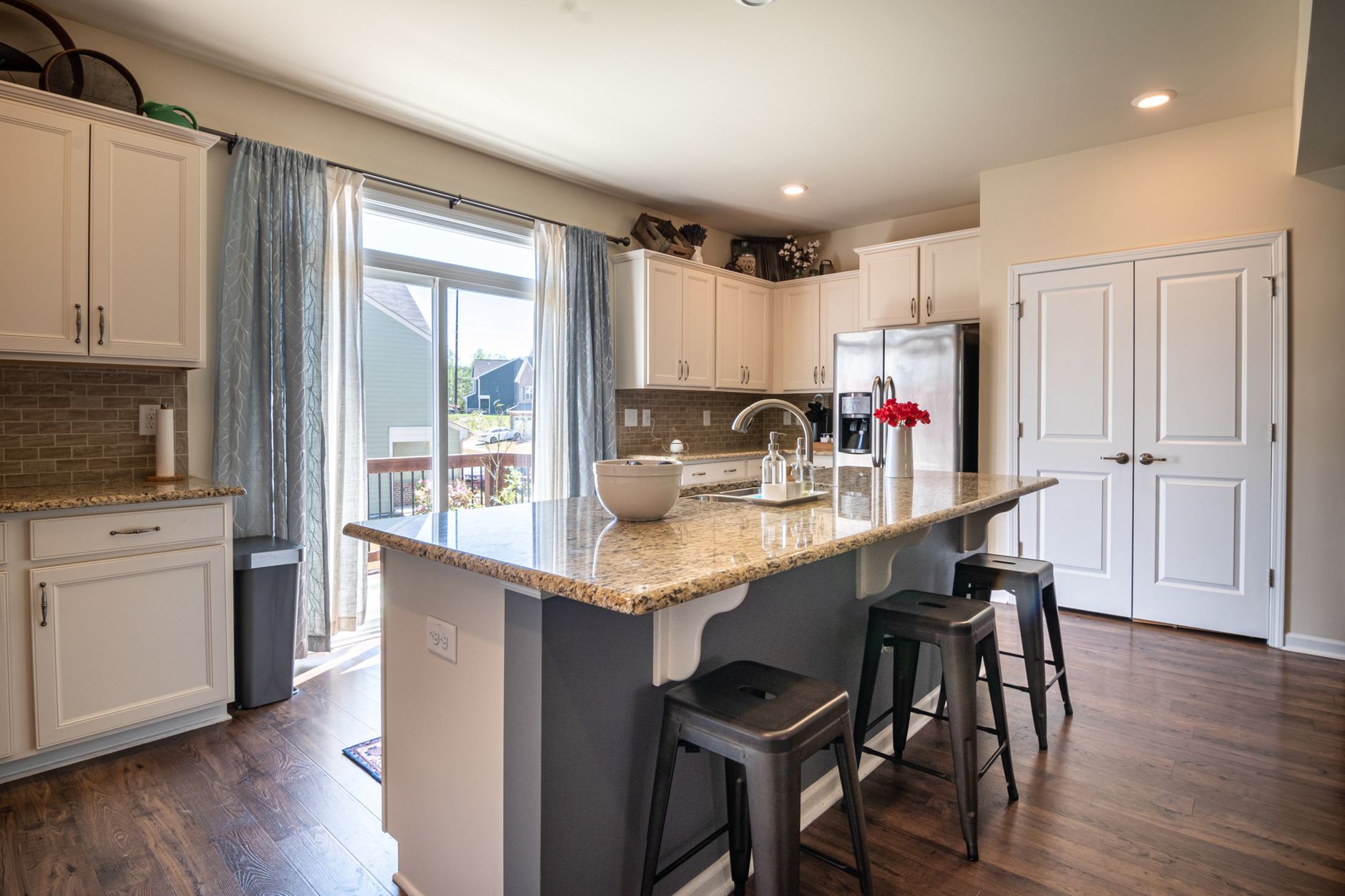
Questions Austin Homeowners Ask Before Buying Granite Countertops
Granite shopping in Austin tends to start with a handful of worries, usually collected from a neighbor, a relative or a forum thread. Is it too heavy for the cabinets? Will it chip at the sink? Can a hot pan sit on it? The answers below come from how the stone behaves on a job site, and they are written for kitchens from Tarrytown to Mueller, where the houses, the water and the summers all push on a countertop a little differently.
Can granite take a hot pan straight off the burner?
Granite forms at temperatures far beyond anything a stovetop reaches, so the stone itself does not mind a hot pot. The risk is not the stone but the sealer and the thermal shock. A pan pulled off a high flame and set down on a cold slab heats one small spot quickly, and a slab with a hidden fissure or a thin section near a cutout can crack from that sudden change. Trivets cost little and spare the sealer. A habit of setting hot cookware on a folded towel or a rack protects the surface better than any claim about heat resistance.
Does granite scratch or chip?
Granite is hard enough that a kitchen knife will usually leave a mark on the knife and not on the counter. That is a reason to use a cutting board anyway, since the stone dulls blades quickly. Chips are a different story. The edge profile decides how exposed a corner is. A sharp square edge can chip when a heavy pot swings into it, and a rounded edge shrugs the same knock off. Most chips happen on the front edge near the sink or at a corner of an island, where people lean and bump.
A small chip can be filled with a color-matched epoxy and sanded flush, and it is hard to find afterwards. A large chunk missing from a thin edge is a replacement job.
How heavy is a granite top, and do the cabinets need help?
A three centimeter slab of granite is heavy, and a full kitchen of it adds up to a load that a solid base cabinet carries without complaint. Cabinets that are in good shape, level and fastened to the wall, handle it. The trouble shows up with older cabinets that have sagged, with a shelf that was never fastened, or with a long overhang at a peninsula. Those get shimmed, braced or backed with plywood before the stone is set, and a steel bracket or a corbel goes under any overhang that reaches far past the cabinet.
Some kitchens in older houses around Hyde Park and Clarksville have cabinets built decades ago from solid lumber, and they are often stronger than the particleboard boxes that came later. The age of the cabinet matters less than the condition of the box and the floor under it.
Why does granite look different from the sample?
A sample is a small cut from a larger piece, and granite varies across a single slab. Color shifts from one end to the other, grain size changes, and a dark cluster can sit in the middle of an otherwise even stone. The sample was chosen to look good, and the slab was not. Reading the whole slab at the yard, with the layout in mind, avoids the surprise. Photographs help, but they flatten the color, and the real stone will look different under a kitchen window than under yard lights.
What about radon and safety?
Granite contains tiny amounts of naturally occurring radioactive minerals, as most rock does, and the topic comes up because of a few widely repeated stories. Measured against everyday background exposure, a granite countertop is not a recognized hazard, and no regulator treats it as one. A homeowner who is still concerned can test the air in the house with an inexpensive radon kit, which covers the whole building and not just the counter.
Does a granite top need sealer in Austin?
Most granite takes a penetrating sealer, and it helps in a city where the tap water is hard and the kitchen sees steady use. The simple test is a few drops of water left on the stone for fifteen minutes. If the stone darkens, the sealer is thin and the surface should be wiped dry, cleaned and resealed. Dense, dark stones may never need it, while light and open-grained stones pick it up readily. Sealer slows staining from oil and wine, and it does nothing about the mineral film that hard Austin water leaves around the faucet, which needs regular wiping.
Can an undermount sink be used with granite?
Yes, and it is the most common choice now. The sink is glued and clipped to the underside of the stone, and the edge of the cutout is polished by hand. What matters is how much stone is left. The narrow strip between the bowl and the front edge carries the load, and a sink with tight corners leaves less stone than one with generous rounded corners. A crack in a granite top most often starts at the corner of an undermount sink cutout, so a larger corner radius is a quiet piece of insurance.
How long does installation take?
Measuring happens first, with a template made of the cabinets and the cutouts, often digitally. The stone is cut and polished at the shop, which takes days, not hours. On the install day, the old tops come off, the cabinets are checked, and the new slabs are carried in, set, seamed and sealed, usually in a single working day for an average kitchen. The faucet and the sink hookup follow once the adhesive has set. Backsplash tile comes after the top is down, so the tile setter can work to the real edge.
What goes wrong most often?
Three things recur. The first is a seam placed in the wrong spot, where it is both visible and weak. The second is an overhang with no support under it. The third is a slab chosen from a sample and not from the full piece. Each of these is cheap to avoid before the stone is cut and unpleasant to fix afterwards, since granite cannot be re-cut once it is on the cabinets without some risk.
Ground movement is the quiet fourth. Austin sits along the Balcones Fault, where the Texas Hill Country limestone gives way to blackland clay, and houses on that clay shift with wet and dry years. A top that was set level can drift, and cabinet runs that were shimmed well at the start are the ones that stay quiet.
Is granite still a good choice next to quartz and quartzite?
Each material suits a different kitchen. Quartz is manufactured, so the pattern is uniform and it needs no sealer. Quartzite is natural stone that can look like marble and is often harder than granite. Granite sits between them in character: natural, tough and varied, with a stone pattern that rewards a careful selection at the yard. Cooks who like heat tolerance and a visibly natural surface often settle on granite, and those who want a very even color lean toward quartz.
What does day-to-day care look like?
Warm water and a drop of dish soap, a soft cloth, and a dry towel around the faucet. That covers most of it. Avoid acidic cleaners, abrasive powders and anything that promises to polish the stone with wax, since wax builds up and shows in raking light. Wipe spills of oil, wine and coffee when they happen. Check the sealer with the water test every so often and renew it when the stone starts to darken.
A granite top that gets that treatment looks nearly the same in fifteen years as it did on install day, which is why people choose it for a kitchen that will be used hard.
Closing thought
Most worries about granite shrink once the stone is chosen from the full slab, the layout is planned around the sink and the seams, and the sealer is kept up. What is left is a hard, natural surface that suits a working kitchen.