Pitting and Fissures in Granite and What Is Normal
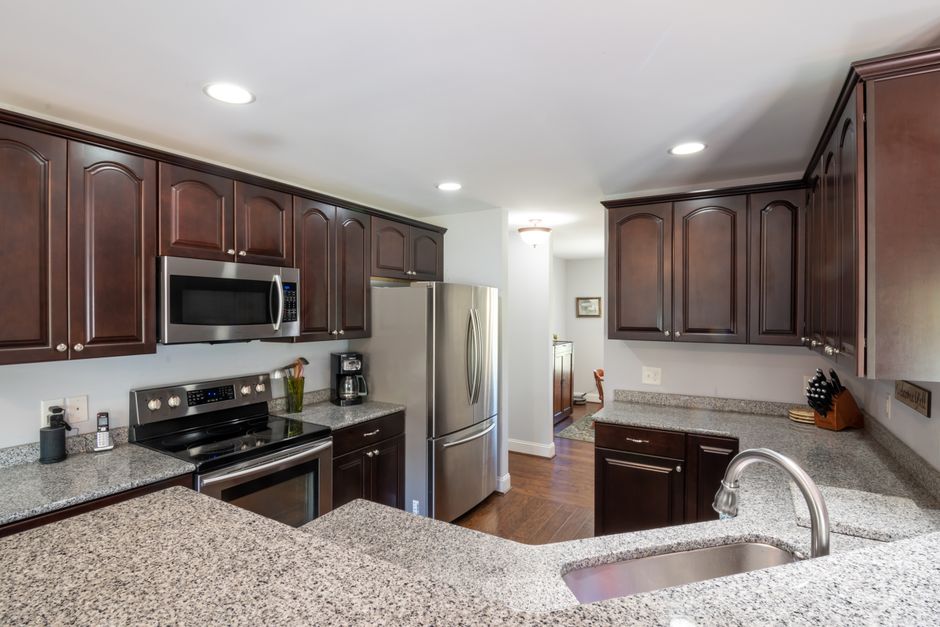
On a polished granite top in good light, a dark hairline can mean three different things. Most of the time it is part of the stone, and the notes at granite countertops austin vicuna chocolate (written for kitchens in Austin, TX) sort the marks into those three groups before anyone reaches for a repair kit.
What is a fissure?

A fissure is a thin, irregular line that formed while the stone was still cooling or under pressure underground, and it was there before the slab was ever cut. It usually looks like a dark squiggle that wanders across the surface, often stopping and starting. Run a fingernail across it and it feels flush. A fissure does not grow, and it does not weaken a top that is properly supported.
What is a pit?
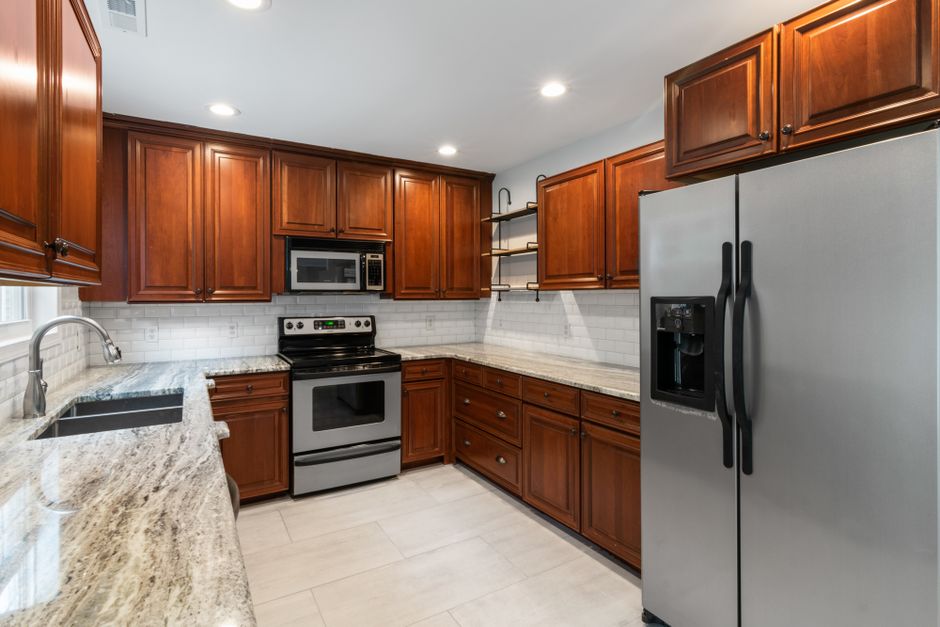
A pit is a tiny dent in the polished face, about the size of a pinhead. It forms where a soft or loosely held mineral crystal, usually a flake of mica, was pulled out during grinding and polishing. Coarse-grained granite shows more of them than a fine-grained one, because larger crystals leave bigger holes. A scattering of pits on a polished finish is normal, and a honed finish hides them better than a high polish does.
What does a true crack look like?
A crack is straight or follows a clean line, and you can feel it with a fingernail, since one side sits a hair higher than the other. It often runs through the full thickness of the slab, and it tends to start at a stress point. The commonest is the corner of a sink cutout, where an undermount sink removes the stone between the bowl and the front edge. A crack that starts at that corner and heads for the front lip is almost always a stress crack and not a fissure.
Can the ground under an Austin house crack a top?
Austin sits on the Balcones Fault, where the limestone of the Texas Hill Country meets the blackland clay to the east. Clay in that belt swells in wet years and shrinks in drought, and a house on it moves a little with the seasons. A long granite run with a seam in a weak spot, or an overhang that was not supported, can crack as the cabinets shift below it. Shimming and a plywood substrate under the stone take up most of that movement.
What should be done about each one?
A fissure and a pit need nothing. A pit can be filled with a clear epoxy if it bothers the eye. A crack calls for a look at the cabinet below, to see whether the run is level and whether the sink cutout was left with enough stone at the corners. A hairline crack can be filled and polished, and a long one near the sink is often replaced.