Reading the Movement and Veining in a Granite Slab
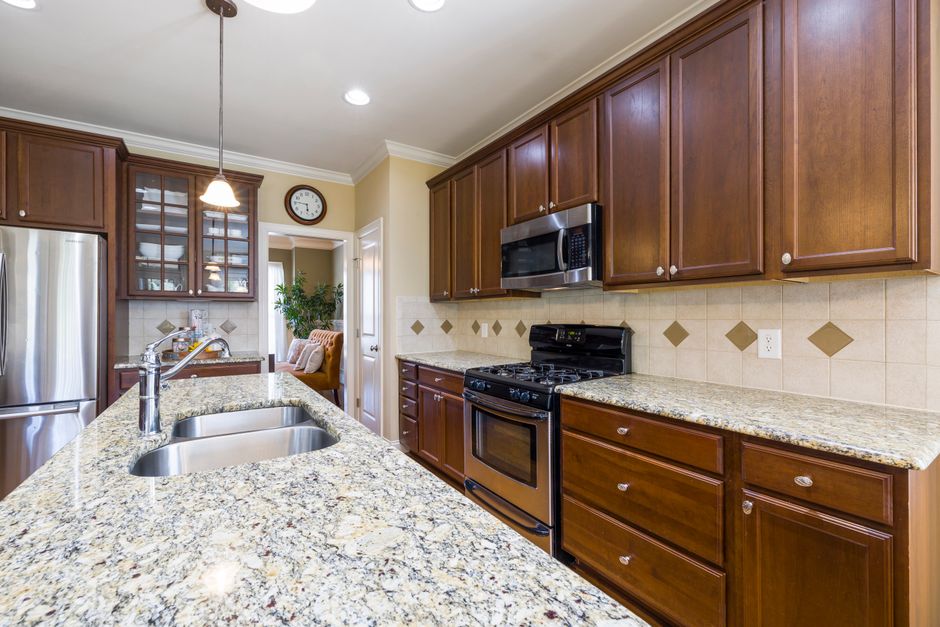
A busy stretch of veining belongs where the eye is already busy. Reading a full slab (the notes at granite countertops austin vicuna chocolate cover the same points) starts at the yard in Austin, TX, with the granite stood upright under the lights and a few steps of clearance on each side.
What is movement in a slab?
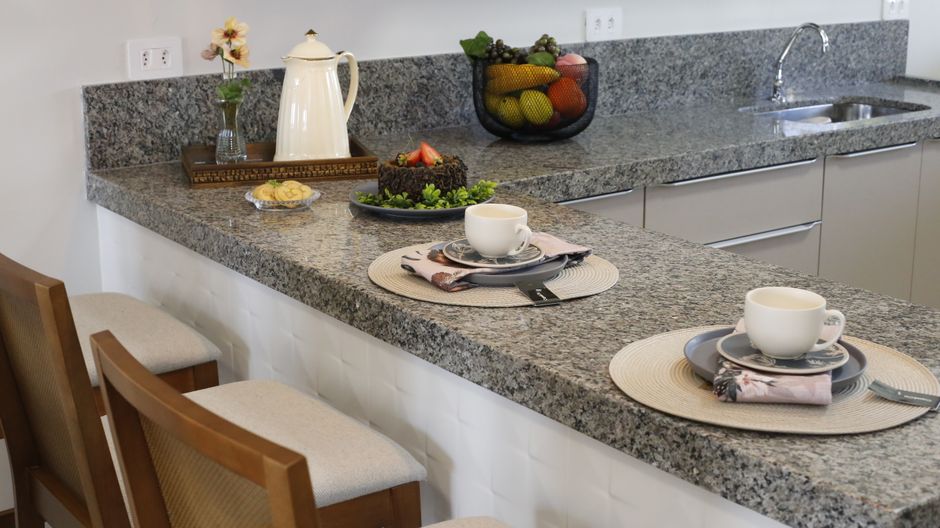
Movement is the direction the pattern travels across the stone. In granite it shows as bands, swirls and streaks of lighter or darker mineral, usually running one way along the length of the slab. A slab with strong movement looks like a frozen river. A slab with little movement looks like speckled gravel. Movement decides how the finished top will feel, calm or active, long before color does.
How are veining and clusters different?

Veining is a line of contrasting mineral that cuts through the stone, often thin and often branching. A cluster is a patch of dense dark or light crystals, round or irregular, that interrupts the surrounding grain. Veining leads the eye along a path. A cluster stops the eye on a spot. Quartzite and marble are known for long veining, while granite more often shows clusters and bands, though some granites carry both.
Where do the busy and quiet parts go?
The layout is a drawing of the cabinets laid over the slab, and the decision is where the quiet parts of the stone sit. A strong cluster over the sink cutout is partly removed when the opening is cut, so some fabricators send that area to the waste. A heavy band suits the island, where people look down at the top from the stools. The wall run behind the range tends to take the calmer stone, because a strong pattern next to a cooktop competes with the backsplash.
Why does a seam change what you see?
Every seam is a place where the pattern has to continue across a joint. If the movement runs lengthwise and the seam falls across it, the bands can step sideways by the width of the cut. Cutting both pieces from one slab and keeping them in order keeps the pattern running through. That is why seam placement is worked out on the slab and not on the cabinet drawing alone.
What does a good inspection look like?
Check the slab dry and again with a little water on it, since water darkens the surface and shows the real color. Look at both edges and at the corners, because the layout often uses them. Ask whether a template of the cabinets can be placed over the photograph so the sink cutout and the overhang at the island are checked against the stone before any blade touches it. Most regrets about a top trace back to a decision made in the last two minutes at the rack.