Honed or Polished Granite in Bright Austin Kitchens
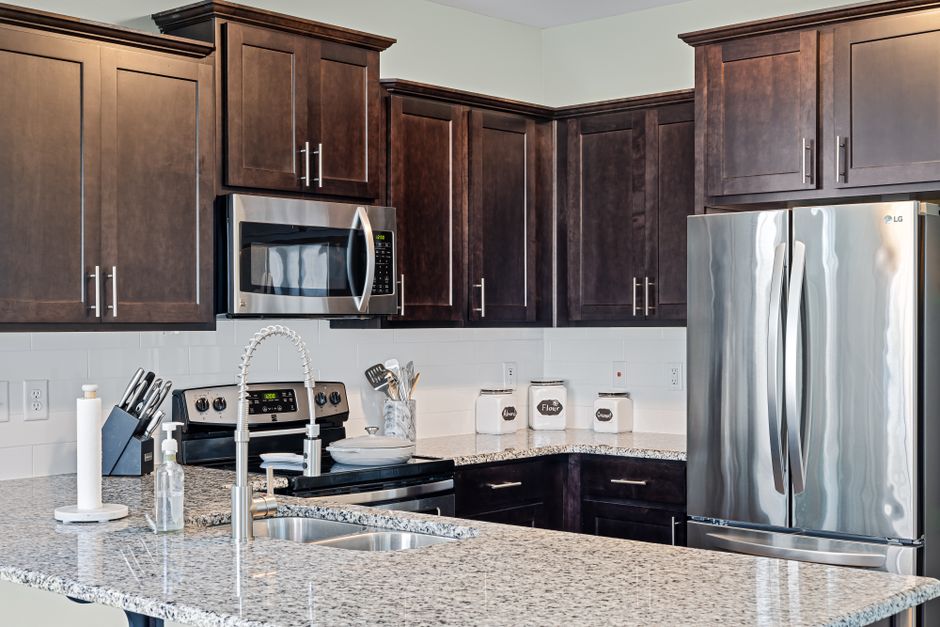
The moment the afternoon sun clears the window over the sink, a polished top and a honed top stop looking alike. The glare in an Austin, TX kitchen is stronger than a showroom light suggests, and the comparison of granite finishes at granite countertops austin vicuna chocolate starts from that fact.
What is the difference between honed and polished?

Both start as the same stone, and the finish comes from how far the grinding goes. A polished finish takes the surface through finer and finer abrasives until it is mirror smooth, which deepens the color and gives it a gloss. A honed finish stops earlier and leaves a soft, matte surface with no reflection. The mineral grains underneath are the same in each case.
How does each finish handle Texas sun?
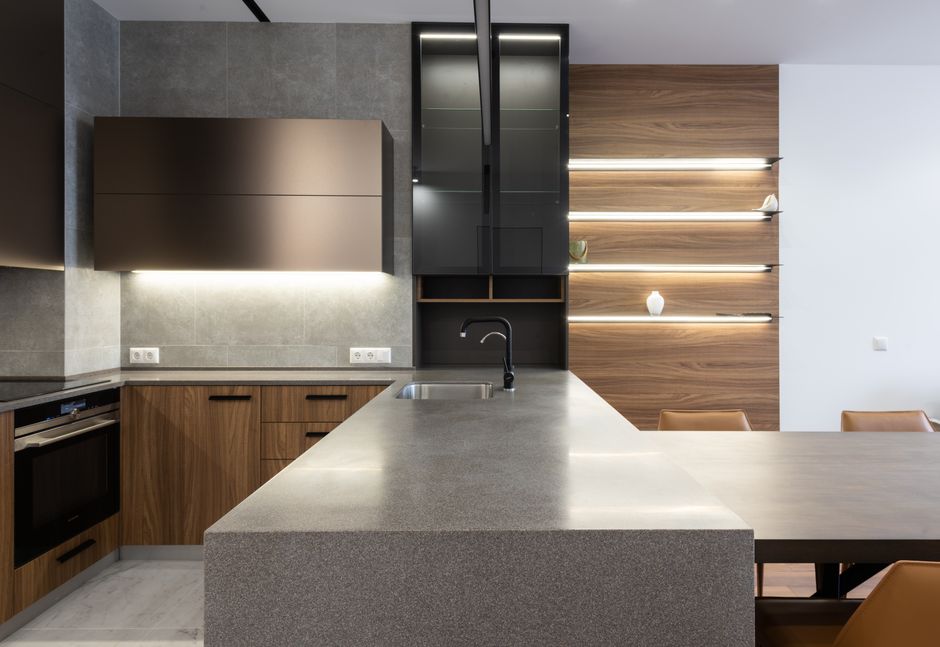
A polished surface throws sunlight back as a bright bar across the room, and a west window in summer can turn a countertop into a mirror for an hour or two. Seeing the stone through that glare is hard. A honed surface scatters the light instead, so the same window gives a soft glow and the pattern stays readable. In a kitchen with big glass over the sink, that difference matters more than the color chart.
Which one shows fingerprints, water spots and scratches?
A polished top shows fingerprints and water rings clearly, because the gloss makes every smear a reflection. Fine scratches are hidden by the polish in most granite, since the stone is hard. A honed top hides fingerprints and rings better, but it shows oil, and it shows scratches differently, as pale lines when a pan is dragged across. Hard water spots are the common complaint on the polished finish, and oil rings on the honed one.
How does the edge profile read on each?
A polished edge catches a thin line of light along an eased edge or a bullnose, which makes the shape clear and a little formal. On a honed edge that line disappears, and the profile reads as a softer shadow. A thick waterfall edge on a honed stone looks like a solid block, while the same edge polished looks like glass. Matching the finish to the edge profile is part of the layout, not an afterthought.
How does sealer behave on a honed surface?
A honed surface is more open than a polished one, because polishing closes the pores a little. It takes sealer more readily and darkens a shade when the sealer goes on, and it needs the drop test more often. A dark honed granite that was never sealed can mark from a ring of oil. Use a sealer made for stone, apply it evenly and buff it dry, since a streak left on a matte surface shows plainly.